Updated:
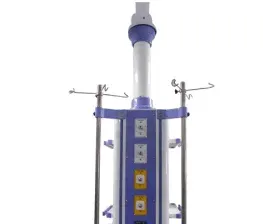
Choose a single-arm pendant for smaller theatres, ICUs and fixed workflows, and a double-arm pendant for larger or multi-speciality theatres that need wider reach and flexible positioning. Both bring medical gases, power and equipment shelves down from the ceiling. Double-arm pendants cost more and place more load on the ceiling structure, so the structure must be checked. Room size, devices carried and table position decide the final configuration.
Comparison at a Glance
| Factor | Single arm | Double arm |
|---|---|---|
| Movement | Rotates around one joint | Two articulated arms for wider positioning |
| Reach | Shorter | Longer |
| Best for | Smaller OTs, fixed workflows, ICU | Larger or multi-speciality OTs |
| Ceiling load | Lower | Higher — structure must be checked |
| Indicative price | Lower end of range | Higher end of range |
Choosing
Room size, number of devices, anaesthesia vs surgical side and table position decide the configuration. See the OT pendant page and pricing guide for indicative costs.
What the pendant carries
List the gases, electrical sockets, data points and equipment each pendant must hold. Anaesthesia pendants and surgical pendants often carry different items, so many theatres use separate pendants for each side of the table.
Ceiling coordination
Pendants share the ceiling with the laminar air flow ceiling, surgical lights and lighting fixtures. Their mounting points and swing areas must be planned so arms do not collide with lights or block airflow over the table.
Documents to request before handover
For OT pendants, agree the handover documents at the start of the project rather than at the end. Typical items include as-built drawings, test and commissioning records for the supplied scope, operating and maintenance instructions, and contact details for service support. Agreeing the list early lets the hospital check each item at handover and keeps records ready for future audits, extensions and maintenance work.
Questions to ask suppliers
Asking every bidder the same questions makes quotations easier to compare and reveals gaps in scope before an order is placed:
- What is the reach and rotation of the proposed pendant?
- Which gases, sockets and shelves are included?
- What ceiling structure and mounting are required?
- How will the pendant be coordinated with lights and the LAF ceiling?
Planning for future equipment
Theatres often add devices over time. Leaving spare sockets, shelf capacity or gas outlets on the pendant can avoid replacing it later. Discuss expected future equipment with the surgical and anaesthesia teams before the configuration is fixed.
Pendants in ICUs
In critical care, pendants keep gases, power and monitors off the floor and make cleaning around the bed easier. ICU layouts and bed spacing decide whether single-arm pendants or bed head panels suit each bed better.
Key points to remember
A short checklist to take into your next design or procurement meeting:
- Single-arm pendants suit smaller theatres, ICUs and fixed workflows.
- Double-arm pendants give wider reach for larger or multi-speciality theatres.
- Check the ceiling structure for the pendant load.
- Coordinate pendants with lights and the LAF ceiling.
- Leave spare capacity for future equipment.
Budget planning
Indicative pendant pricing is shown on our OT pendant page and pricing guide, and the final price depends on configuration and accessories. Comparing quotes for the same reach, gases, sockets and shelves gives a fair view of value.
Getting a second opinion
If you are unsure which configuration suits your room, share the layout and equipment list with us. We will suggest a pendant arrangement that your surgical and anaesthesia teams can review before ordering.
What this means for Indian hospitals
Practical steps for Indian hospitals choosing pendants:
- Measure the room and mark the operating table position.
- List devices, gases and sockets needed on each side of the table.
- Have the ceiling structure checked for the proposed pendant load.
- Coordinate pendant positions with surgical lights and the LAF ceiling.
- Compare quotes for the same configuration and accessories.
When this guidance shapes a theatre project, compare scope and finishes from modular OT suppliers before you finalise drawings.
How Unicare helps
We supply OT pendants and plan them with the theatre ceiling and gas supply.
Frequently Asked Questions
How much does an OT pendant cost?
Indicatively ₹30,000 to ₹1 Lakh per unit, depending on configuration and accessories.
Can a pendant be used in an ICU?
Yes. Single-arm pendants are often used in ICUs where workflows are fixed.
Does a double-arm pendant need a stronger ceiling?
It places more load on the ceiling, so the structure must be checked before installation.
Should anaesthesia and surgical pendants be separate?
Many theatres use separate pendants because each side of the table needs different gases and devices.