
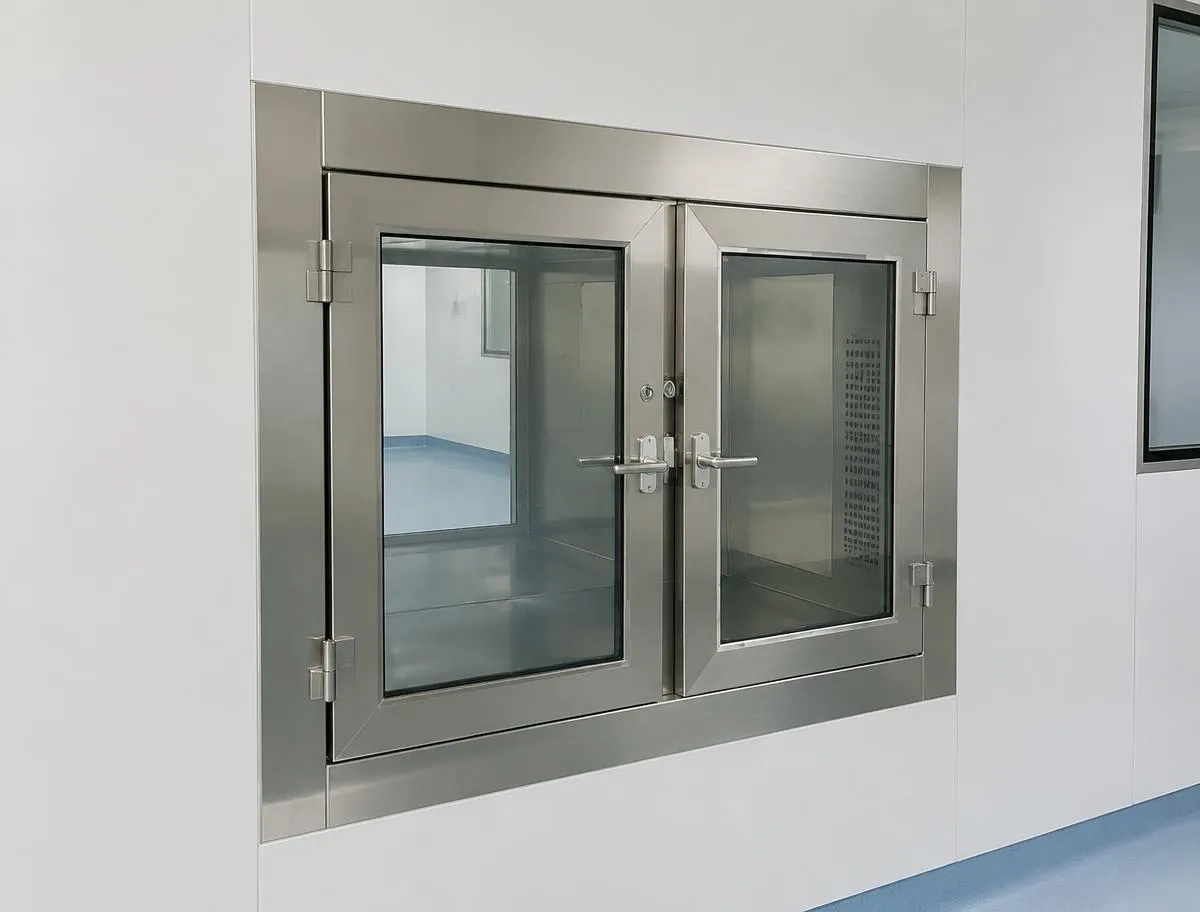
A pass box looks like a simple cabinet set into a wall, but it does an important job. It lets materials move between two areas without people walking between them and without both sides being open to each other at the same time. In hospitals, pass boxes are common between operation theatres and corridors, between CSSD zones, and in laboratories, pharmacies and other controlled spaces.
When you start looking at pass boxes, you will quickly come across two main types: static and dynamic. This guide explains the difference in plain language, where each type usually fits, and what to consider before you decide which one your hospital needs.
What is a pass box?
A pass box, sometimes called a pass-through box or transfer hatch, is a chamber mounted in a partition wall with a door on each side. Items are placed inside from one room, the door is closed, and staff in the other room open their door to collect them.
Most hospital pass boxes have interlocked doors. The interlock, mechanical or electrical, prevents both doors from opening at once, so air and contamination cannot flow directly from one room to the other through the opening. Many units also include a UV lamp for use between transfers, indicator lights showing whether a door is open or a cycle is running, and smooth stainless steel interiors that are easy to wipe clean.
The purpose is the same in every setting: reduce the number of times people cross between rooms, keep doors closed, and help maintain the cleanliness and pressure difference of the cleaner room.
What is a static pass box?
A static pass box has no fan or filtration system of its own. It is essentially a sealed, interlocked chamber. The air inside the box is whatever air was there when the door last closed.
Because it has no moving air system, a static pass box is simpler, has fewer parts to maintain and generally needs no ongoing filter replacement. It is typically used between two areas of similar cleanliness, or where the items being transferred are already wrapped or packed, so the box only needs to act as a controlled, closed hatch.
- No blower or HEPA filter inside the chamber.
- Interlocked doors to stop both sides opening at once.
- Often fitted with a UV lamp and door-status indicators.
- Simpler construction and maintenance.
What is a dynamic pass box?
A dynamic pass box adds an air system to the chamber. A blower draws air through a pre-filter and a HEPA filter and pushes filtered air through the chamber, so the space inside is actively flushed with clean air. Some designs recirculate the air; others exhaust it.
Dynamic pass boxes are typically used when materials move from a less clean area into a cleaner one and the cleaner side needs extra protection, or where the cleaner room is under a controlled pressure that should not be disturbed. The filtered air helps clear particles that may have entered with the item or when the outer door was opened.
- Built-in blower with pre-filter and HEPA filter.
- Filtered air flushes the chamber before the inner door is opened.
- Interlocked doors, usually with a timed cycle and indicators.
- Needs electrical supply and periodic filter checks and replacement.
Static vs dynamic pass box: side-by-side
Put simply, a static pass box is a closed, interlocked hatch, while a dynamic pass box is an interlocked hatch that also cleans the air inside it. Comparing them across a few practical points makes the choice easier:
- Air handling: static has none; dynamic has a blower and HEPA filtration.
- Typical use: static between areas of similar cleanliness or for wrapped items; dynamic from a less clean to a cleaner area.
- Power: static usually needs power only for UV, interlock and indicators; dynamic also needs it to run the blower.
- Maintenance: static mainly needs cleaning and lamp checks; dynamic also needs filter checks and replacement.
- Space: dynamic units are usually deeper or taller to house the blower and filter, so the wall opening may differ.
- Cost: static units are generally simpler and cost less; dynamic units cost more because of the air system.
Where each type fits in a hospital
There is no single rule for every hospital, and the final decision should follow your infection-control team's requirements and the classification of the rooms involved. Still, some common patterns help.
Operation theatres
Pass boxes are often installed between the operation theatre and the clean or dirty corridor, so supplies can go in and used items can come out without opening the main OT doors. Where the theatre is a controlled, positively pressurised clean room and items are coming from a less clean area, a dynamic pass box is commonly considered. Where both sides are similarly clean, or only sealed packs are transferred, a static pass box may be enough. Planning pass boxes together with the modular OT layout, wall panels and HVAC design avoids awkward retrofits later.
CSSD
In a Central Sterile Services Department, pass boxes help maintain the one-way flow from the dirty decontamination zone to the clean packing zone and on to the sterile store and issue point. They are also used as issue hatches for sterile goods. The choice between static and dynamic depends on which zones the box connects and on the department's own protocols.
Laboratories, pharmacies and ICUs
Microbiology labs, IVF labs, compounding pharmacies, isolation rooms and some ICUs also use pass boxes to limit traffic through doors. The cleaner and more controlled the receiving room, the more likely it is that a dynamic unit will be specified.
Questions to ask before choosing
Before you request quotations, it helps to have answers to these questions:
- Which two rooms will the pass box connect, and how clean is each one?
- Is either room pressure-controlled, and which way should air flow?
- What kind of items will be transferred: wrapped sterile packs, open instruments, samples, medicines or waste?
- What internal size do you need for the largest item or tray?
- What wall type will it be fitted into: modular panel, brick or another partition?
- Do you need a UV lamp, a timed cycle, a mechanical or electrical interlock, or extra indicators?
- Is a power point available at the location, and who will maintain filters?
- What does your infection-control team or the standards your hospital follows require?
Construction details worth checking
Whichever type you choose, the build quality affects how well the pass box works over time. Smooth, crevice-free interiors with rounded corners are easier to clean. Stainless steel inside surfaces stand up to frequent wiping. Door seals, hinges and interlocks should operate reliably after repeated use. The unit should sit flush and sealed with the wall so the joint does not become a gap for air or dirt.
For dynamic units, ask how filters are accessed and replaced, whether the airflow can be checked, and what routine maintenance is recommended. A pass box that is difficult to service is more likely to be neglected.
Common mistakes
Problems with pass boxes usually come from planning rather than the product itself:
- Choosing a static unit where the receiving room really needs filtered transfer.
- Choosing a dynamic unit but not planning for power or filter maintenance.
- Making the internal chamber too small for the trays actually used.
- Installing at an awkward height or in a corridor where staff cannot reach it easily.
- Bypassing the interlock or leaving doors open, which defeats the purpose.
So which one does your hospital need?
If you are moving already-packed items between rooms of similar cleanliness and want a simple, low-maintenance solution, a static pass box is often the practical choice. If you are moving items into a cleaner, controlled room such as an operation theatre or clean lab and want the chamber itself to be flushed with filtered air, a dynamic pass box is usually the better fit.
Many hospitals use both: dynamic units at the most sensitive transfer points and static units elsewhere. Unicare Medical Solutions supplies dynamic and static pass boxes as part of modular OT, CSSD and hospital infrastructure projects. Share your room layout and requirements and we will help you choose the right type and size.