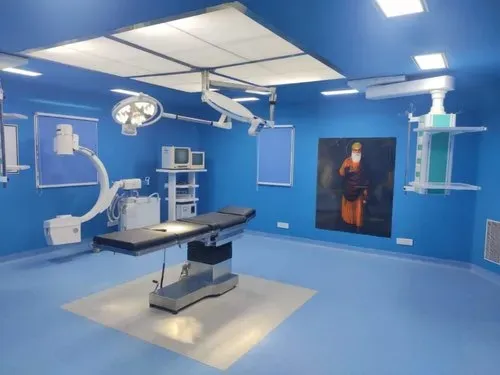
Comparison at a Glance
| Factor | Modular OT | Conventional OT |
|---|---|---|
| Wall surface | Factory-finished panels with sealed joints | Plaster with paint, tiles or coatings |
| Cleaning | Smooth, non-porous surfaces, coved corners | Grout lines and cracks can be harder to clean |
| Site work | Less wet civil work at site | More wet work and curing time |
| Services integration | Planned with HVAC, LAF and gases in one design | Coordinated separately across trades |
| Future upgrades | Panels can be opened or replaced | Usually requires breaking and rebuilding |
| Initial cost | Generally higher | Generally lower |
Which should you choose?
Hospitals focused on infection control, faster site timelines and easier future upgrades often choose modular OTs. Where budget is the main constraint, a conventional OT with good finishes and HVAC may be chosen. A semi-modular upgrade is a middle path for existing theatres.
Frequently Asked Questions
Is a modular OT more expensive than a conventional OT?+
The initial cost is usually higher, but it varies with materials and scope. See the pricing guide for indicative ranges.